

Getting a Head Start on Spring: Choosing the Right Pepper Seeds for Indoor Starting
As a home gardener, there's nothing quite like the thrill of watching your garden come to life in the spring. But with the unpredictable winter weather, it can be challenging to know when to start your seeds indoors. In this post, we'll explore the best pepper seeds to start indoors in January for USDA zones 3-9.
Why Start Pepper Seeds Indoors?
Starting your pepper seeds indoors 4-6 weeks before the last frost date allows you to get a head start on the growing season. This technique is especially useful for pepper varieties that are sensitive to frost or have a longer germination period. By starting them indoors, you can give them the best chance of thriving in your garden.
Choosing the Right Pepper Varieties for Indoor Starting
When it comes to choosing pepper seeds for indoor starting, you'll want varieties that are compact, produce a high yield, and mature relatively quickly. Here are some popular pepper varieties perfect for indoor starting in January:
Sweet Peppers
- Cubanelle: I grew some of these last season and the plant produced some incredibly sweet and massive peppers. I highly recommend trying this one out if you like sweet peppers.
- California Wonder: A classic sweet pepper variety with a high yield and compact growth habit.
- Bell Boy: Another popular sweet pepper variety with a high yield and resistance to disease.
- Coolapeño: This is one has the flavor of a jalapeño without the heat. I grew this one last year and folks who can't tolerate heat, enjoyed them. Unfortunately, I forgot to save seeds from this one.
Hot Peppers
- Jalapeño: If you haven't eaten jalapeños for fear they may be too hot, you've definitely seen them. They're everywhere and produce really well. I've been growing them the last two years and
- Cayenne: A spicy hot pepper that I've grown twice. They are hot and can grow up to about 6 inches long. Generally, I've seen Cayenne varieties produce really well.
- Anaheim Pepper: A mild hot pepper variety with a compact growth habit. Unfortunately, my plant didn't survive too long. It was fine one day and then the next all the leaves dropped. I did get some really nice peppers before the plant died. I will grow this one again.
Specialty Peppers
- Poblano Pepper: This is one I haven't grow yet but it's on my list to try. It's a mild hot pepper variety with a compact growth habit and high yield.
- Habanero: This one was by far my biggest producer last year. I froze them, gave away more than pounds of them and still had enough left over to make lots of different hot sauces, salsas and use them in daily cooking. It's a spicy hot pepper with very high yields and can grow to be a little smaller than a golf ball.
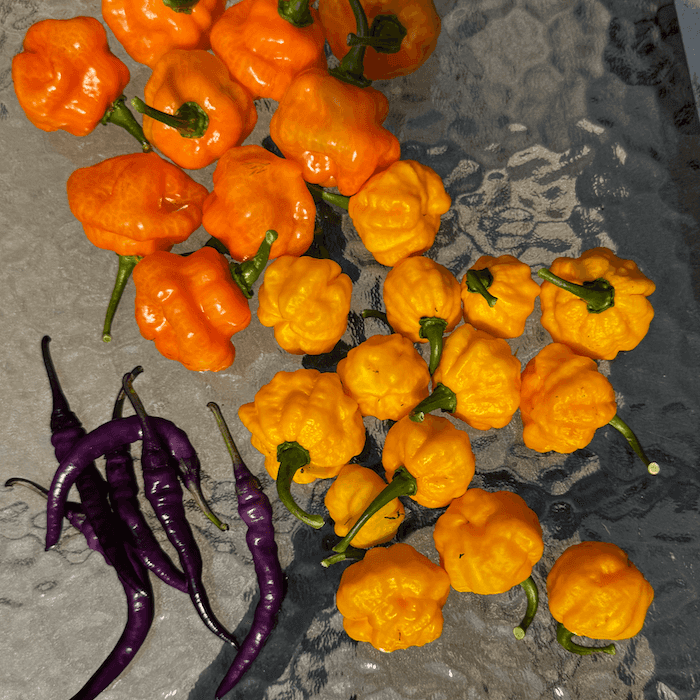
In addition to these common varieties, there are hundreds, if not thousands of more rare heirloom varieties that you can't find in stores. I grew a Buena Mulata cayenne pepper and it was spicy, tasty and beautiful to look at. It starts out purple and turns red when it's fully ripe. I highly recommend doing seed swaps with friends or a local group. It'll be like a box of chocolates!
Tips for Indoor Starting
- Use seed starting mix: A seed starting mix specifically designed for indoor seed starting is the best option. You can also use a sterile medium like coconut coir or peat.
- Provide adequate light: Most pepper varieties require at least 12-14 hours of supplemental lighting per day.
- Maintain optimal temperatures: Most pepper varieties prefer daytime temperatures between 65-75°F (18-24°C) and nighttime temperatures around 55-65°F (13-18°C).
- Air Flow: Once the seeds have sprouted and you have seedlings 3+ inches tall, get a fan blowing a light breeze. It helps them to build stronger stems as they start to mature. This will help when moving them outdoors in the spring.
By following these tips and choosing the right pepper varieties for indoor starting, you'll be well on your way to enjoying a bountiful harvest of delicious peppers in the spring. Happy gardening!